
Dhaka | The National Citizen Party (NCP), born out of Bangladesh’s powerful student-led movement that helped dismantle Sheikh Hasina’s rule in 2024, is now facing an existential political crisis ahead of the country’s proposed general elections scheduled for February 12 next year. Once hailed as a fresh “third force” challenging traditional politics, the party today appears fractured, politically weak on the ground, and increasingly dependent on controversial alliances.
Founded by student leaders who emerged from the anti-Hasina protests and played a role in paving the way for Muhammad Yunus to head the interim government, the NCP is now reportedly weighing seat-sharing arrangements with either the Bangladesh Nationalist Party (BNP) or the Bangladesh Jamaat-e-Islami. With the Awami League currently barred from electoral participation, the opposition space has become fiercely competitive.

Strong Online, Weak on the Ground
Local media reports suggest that while the NCP has maintained visibility on social media and digital platforms, its organisational reach at the grassroots level remains limited. In the 350-member Jatiya Sangsad, the party is no longer talking about contesting all seats and is instead negotiating for 30 to 50 seats. Talks with Jamaat-e-Islami over seat-sharing are reportedly underway, though Jamaat has described NCP’s initial demand of 50 seats as unrealistic, with discussions narrowing to around 30 constituencies.
Internal Rift and Resignations
The possibility of alliances has deepened divisions within the party. One faction believes aligning with Jamaat is essential for electoral survival, while another prefers an understanding with the BNP—especially after the return of BNP’s acting chairman Tarique Rahman to Bangladesh. Amid this turmoil, Mir Arshadul Haq, NCP’s joint member secretary and Chattogram unit chief, resigned from his post. Considered a prominent face of the anti-Jamaat camp within the party, his exit has highlighted the severity of the internal crisis.
‘Grave of Youth Politics’
Allegations have also surfaced that Jamaat may offer 1.5 crore taka per seat to the NCP as part of a possible deal. Reacting sharply, student leader Abdul Qader termed the development as “digging the grave of youth politics.” He claimed that under such an arrangement, the NCP would refrain from fielding candidates in nearly 270 seats and instead support Jamaat candidates.

‘King’s Party’ Tag Resurfaces
The NCP has long faced accusations of being a “king’s party,” allegedly enjoying disproportionate patronage from interim government chief Muhammad Yunus. Critics cite advisory roles in the cabinet, appointments to reform commissions, and delays in the electoral process as evidence of this support. Ironically, the NCP has also accused Yunus of tilting towards the BNP, exposing a relationship marked by political convenience rather than trust.
Impact on Democratic Reform Alliance
The turmoil within the NCP has also affected the Democratic Reform Alliance, a coalition it leads along with the Amar Bangladesh Party and the State Reform Movement. The alliance was founded on the condition of maintaining distance from both BNP and Jamaat, but signs of that understanding now appear to be unraveling.
Tarique Rahman’s Return Shifts the Narrative
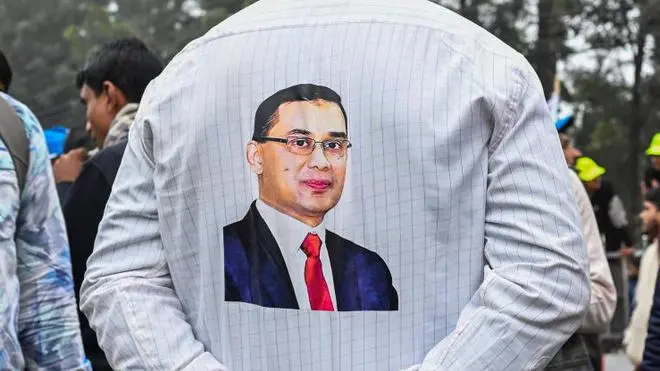
Bangladesh’s political landscape witnessed a dramatic shift on December 25, when BNP’s acting chairman Tarique Rahman returned home after 17 years in exile. His arrival in Dhaka was marked by a massive show of strength, with millions lining the streets in a grand roadshow from Hazrat Shahjalal International Airport to his residence. In his first public address, Rahman—son of former Prime Minister Khaleda Zia—invoked Martin Luther King Jr.’s iconic “I Have a Dream” speech, declaring that he has “a plan for the country.”
Against this backdrop, the NCP’s recent attempts to mobilise India-averse sentiment appear to have lost traction. As Bangladesh moves closer to a high-stakes election, the party that once symbolised youthful rebellion and political renewal now finds itself struggling for relevance, unity, and ideological clarity.